
4 products


Purwell Deer Legs for Dogs, 2 pcs
Regular price
6,29 €
Sale price6,99 €
(Unit price
3,15 € / stück )
-10%
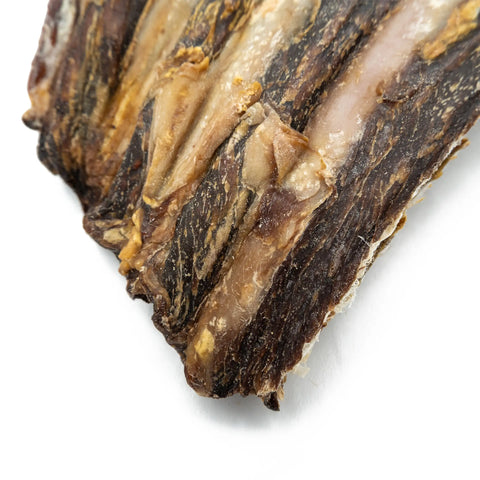
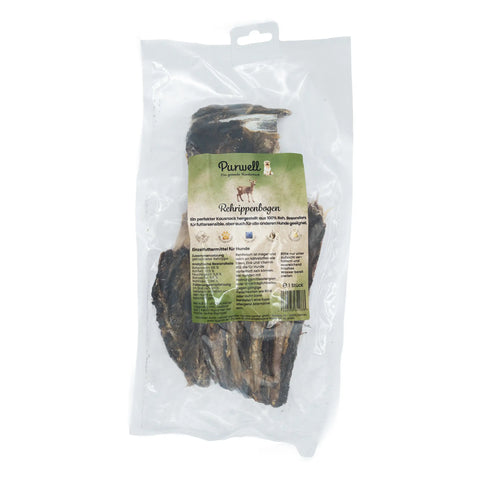
Purwell Whole Deer Rib, 1 pc
Regular price
7,46 €
Sale price8,29 €
(Unit price
7,46 € / stück )
Sold Out
-10%


Purwell Horse Lower Leg for Dogs
Regular price
12,99 €


Purwell Tuna Crackers for Dogs: Natural Tuna Bone
Regular price
7,99 €
Which bone for which dog?
- Deer legs with fur: hoof, tendon, bone and fur in one. For medium and large dogs that chew calmly. The fur supports digestion.
- Whole deer rib: a whole rib arch, softer than leg bones. For dogs that like bones but are not power chewers.
- Horse lower leg: the largest and hardest bone here. Only for large dogs with strong jaws.
- Tuna bone: the dried backbone. Hard but fibrous, does not splinter. The safe choice for everyone who has avoided bones so far.
Are bones dangerous for dogs?
Cooked bones yes, they splinter into sharp edges. Dried natural bones are much safer because they wear away slowly. Still, three rules: only for dogs that chew instead of gulp, only under supervision, and take the rest away as soon as it could be swallowed. Not for puppies before teething is complete, not for dogs with brittle teeth.
Bones and digestion
Bones firm up the stool. For most dogs that is no problem, for dogs prone to constipation a bone should remain the exception. Once a week is a good frequency for a healthy dog.
Which bone for allergies?
Deer and horse are new protein sources for most dogs, and so is tuna. All bones here consist of a single animal species.
Related categories: Game, Horse, Fish, Antler, horn and wood.
